
Key Takeaways
- Interior waterproofing manages water after it reaches the foundation wall; exterior waterproofing stops water from reaching the wall at all.
- Interior systems avoid excavating the yard, which usually means less disruption and a shorter timeline than exterior work.
- Exterior waterproofing is generally the better choice when the foundation wall itself has cracks, deteriorating masonry, or needs structural repair.
- Interior systems still need a sump pump and a place for water to discharge — they don't eliminate that requirement, they just relocate where the work happens.
- Many homes end up with a combination of both, applied to different sections of the foundation based on where each is actually needed.
If you've gotten quotes for basement waterproofing, you've probably heard both "interior" and "exterior" waterproofing mentioned — sometimes as if they're competing options for the same problem. They're not. They work in fundamentally different ways, and the right choice depends on what's actually causing your basement to be wet.
How interior waterproofing works
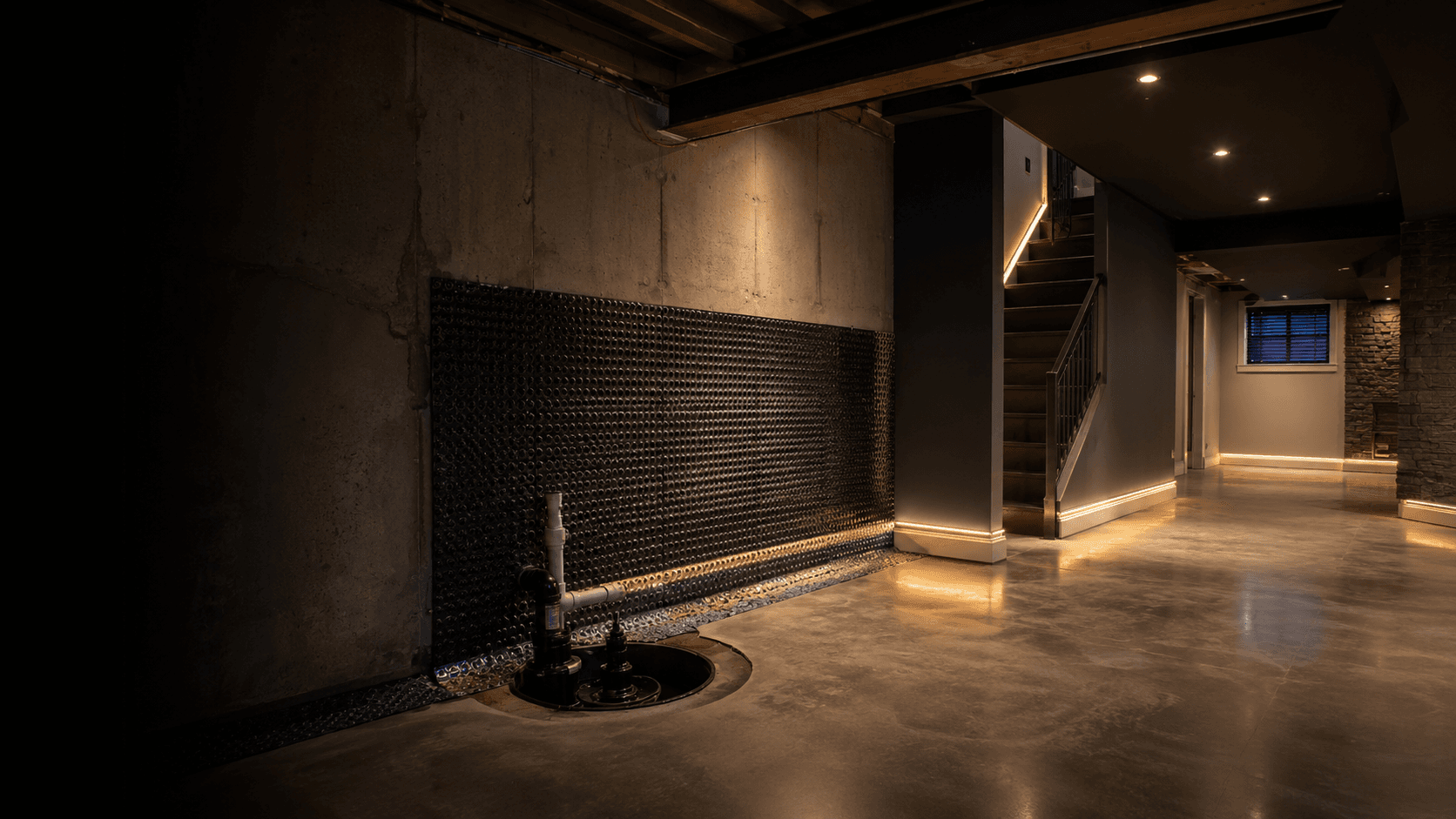
Interior waterproofing installs a drainage channel along the interior perimeter of the basement floor, tied into a sump pump. Groundwater that seeps through the foundation wall or floor-wall joint is collected by this channel before it can spread across the floor, then pumped out and away from the house. Because the work happens entirely inside the basement, it doesn't require excavating the yard — which generally means a faster project with less disruption to landscaping, driveways, or decks.
Best suited for: homes where the foundation wall itself is structurally sound but groundwater is seeping through hairline cracks, porous concrete, or the floor-wall joint, and where avoiding excavation is a priority.
How exterior waterproofing works
Exterior waterproofing excavates down to the foundation footing from outside the house, allowing the crew to inspect and repair the foundation wall directly, then apply a waterproof membrane and install (or replace) exterior weeping tile. This stops water from ever reaching the wall in the first place, rather than managing it after the fact.
Best suited for: homes where the foundation wall has cracks, deteriorating masonry, or other damage that needs direct repair, or where the existing exterior weeping tile has failed and needs replacement.
Comparing the two approaches
| Interior Waterproofing | Exterior Waterproofing | |
|---|---|---|
| Excavation required | No | Yes, along the foundation |
| Repairs the wall itself | No — manages water after the wall | Yes — wall is exposed and repaired |
| Typical timeline | Shorter | Longer |
| Landscaping impact | Minimal | Requires restoration after excavation |
| Best for | Seepage through an otherwise sound wall | Cracked, damaged, or failing foundation walls |
A sump pump is part of both conversations
It's worth noting that a sump pump is a necessary component of an interior system, since it's what actually discharges the water the interior drainage collects. Exterior systems can sometimes route water to a gravity discharge point instead, but many exterior systems also tie into a sump pump depending on the property's grading.
How to actually decide
The deciding factor isn't your budget alone — it's the condition of the foundation wall. If the wall is structurally fine and water is simply finding its way through, interior waterproofing is often the more efficient fix. If the wall has visible damage, active cracking, or deteriorating masonry, exterior waterproofing addresses the root cause in a way interior systems can't. A proper on-site assessment, ideally including a look at the wall from both sides where possible, is what actually determines which approach — or combination of both — makes sense for your home.
Frequently Asked Questions
- Which is cheaper, interior or exterior waterproofing?
- Interior waterproofing is typically less expensive since it doesn't require full-perimeter excavation. Exterior waterproofing costs more but addresses the foundation wall itself, which interior systems don't.
- Can interior waterproofing fix a crack in my foundation wall?
- Interior waterproofing manages water after it's inside the wall cavity, but it doesn't repair the wall itself. A cracked wall usually still needs crack repair or, if the crack is part of a larger issue, exterior repair.
- Does exterior waterproofing disrupt landscaping?
- Yes, since it requires excavating along the foundation. A reputable contractor will restore grading and landscaping as part of the job, but some disruption during the work itself is unavoidable.
- Can I combine interior and exterior waterproofing on the same house?
- Yes — it's common to use exterior waterproofing on a wall section with an active structural or crack issue, and interior systems on the rest of the foundation where the goal is simply managing groundwater.