
Key Takeaways
- Surface water problems — grading, downspouts, and clogged gutters — are the most common and least expensive cause of basement flooding after rain.
- A sump pump failure during a storm is one of the most damaging causes, since it usually coincides with a power outage.
- Failed or clogged weeping tile can't carry groundwater away fast enough during heavy rain, forcing water to find another path — often straight through the foundation wall.
- A backed-up municipal sewer during extreme rainfall can push wastewater into a basement through drains, which a backwater valve is specifically designed to prevent.
- The right fix depends entirely on which cause applies — treating the wrong one won't solve a flooding basement.
A basement that stays dry through most of the year and then floods during one heavy storm isn't unlucky — it's usually a sign that one specific part of the home's drainage system is being pushed past its limit. Understanding which one is what separates a quick fix from a repeat problem every time it rains hard.
Poor grading and downspout drainage
The single most common cause of basement flooding during heavy rain has nothing to do with the foundation itself — it's surface water. If the ground around your home slopes toward the foundation instead of away from it, or if downspouts discharge water right next to the foundation wall, heavy rain sends a concentrated flow of water directly at your basement walls. This is also the least expensive cause to fix, often requiring only regrading and downspout extensions.
A sump pump that can't keep up
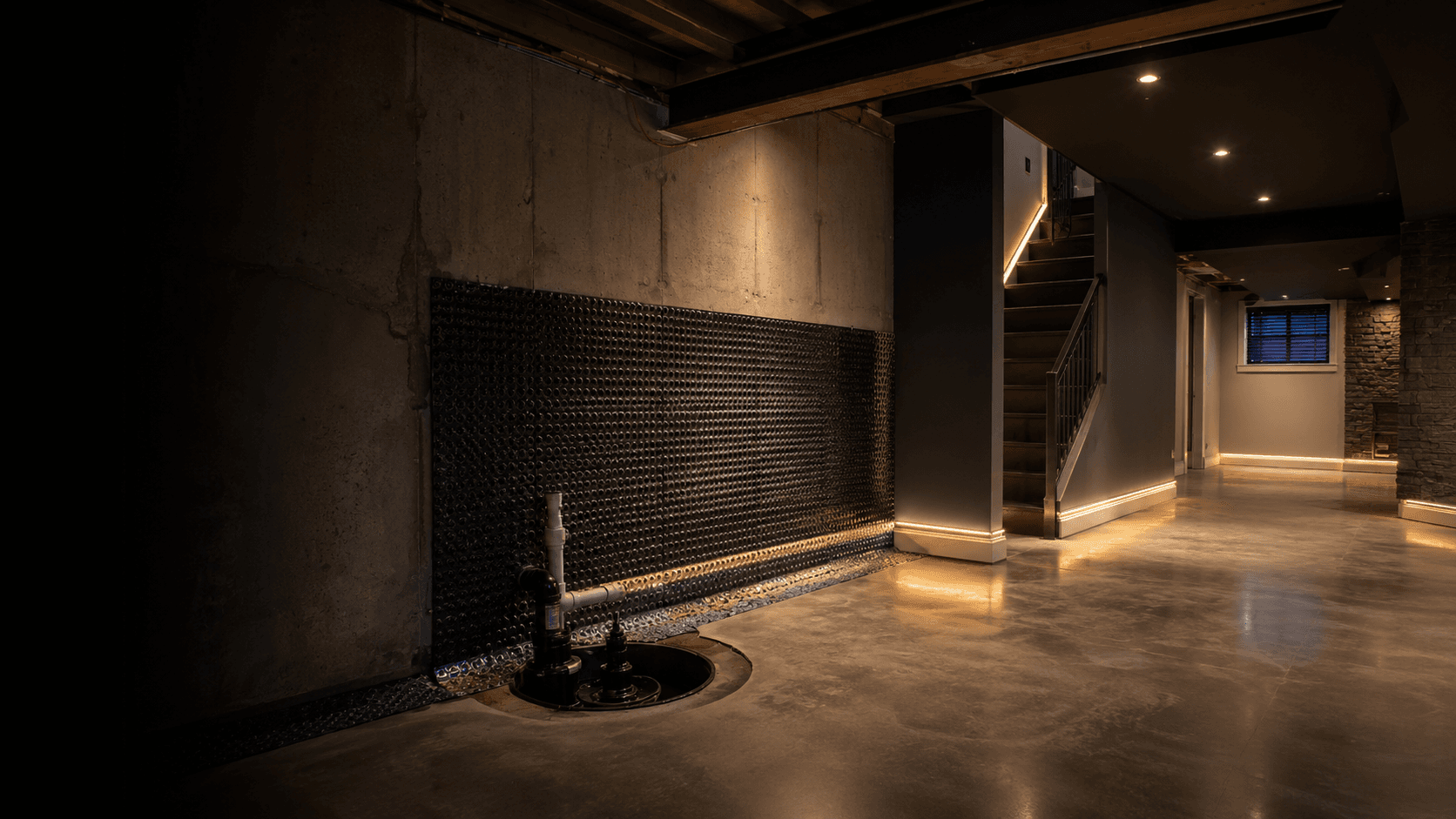
Homes with an interior weeping tile system rely on a sump pump to discharge collected groundwater away from the foundation. During a heavy storm, three things commonly go wrong: the pump is undersized for the volume of water arriving, the float switch fails, or the power goes out — which is especially damaging since power outages often accompany the same storms that cause the most flooding. A pump without battery backup has no way to keep running through an outage.
Failed or clogged weeping tile
Weeping tile is the perimeter drainage system running along your foundation footing. Older clay tile can crack, shift, or clog with silt over decades, and even modern systems can clog with sediment over time. When weeping tile can't move groundwater away fast enough during a heavy rain event, that water has nowhere to go but toward the path of least resistance — often straight through a foundation wall or floor joint.
Municipal sewer backup
During extreme rainfall, municipal sewer systems — especially older combined systems — can become overwhelmed and back up. Without a backwater valve installed on your main sewer line, that backed-up wastewater can push back into your home through basement drains, toilets, and floor drains. This is generally considered the most contaminated and damaging type of basement flooding.
Window wells without proper drainage
A below-grade window well collects rain just like the rest of your yard, but has nowhere for that water to go unless it's connected to a working drain. During heavy rain, an undrained window well can fill and overflow directly against the basement window frame, leaking through a path that's often mistaken for a foundation problem.
Foundation cracks under hydrostatic pressure
Heavy, saturated soil around a foundation creates hydrostatic pressure — water actively pushing against the foundation wall. An existing hairline crack that never leaked during normal rain can start leaking once that pressure increases during a major storm.
Figuring out which cause applies to you
The pattern of when and where water appears is the biggest clue: water appearing at a specific wall crack points to hydrostatic pressure; water backing up through floor drains points to sewer backup; a wet basement with a sump pump that isn't running points to a pump or power failure. A proper on-site assessment — ideally during or right after a rain event — is the fastest way to confirm the actual cause and avoid paying for a fix that doesn't address it.
Frequently Asked Questions
- Why does my basement only flood during heavy rain, not regular rain?
- This pattern usually points to a capacity problem rather than a simple leak — your drainage system (grading, weeping tile, or sump pump) can likely handle normal rainfall, but gets overwhelmed once volume increases past a certain point during a heavy storm.
- Can a full sump pit cause flooding even if the pump is working?
- Yes, if the pump is undersized for how much water is arriving during a heavy storm, it can run continuously and still not keep up, allowing the pit to overflow.
- Is basement flooding after rain always a foundation problem?
- No — it's often a surface drainage issue (grading, downspouts) or a mechanical failure (sump pump, weeping tile) rather than a problem with the foundation itself. Correctly diagnosing the cause is the first step.
- Does a backwater valve prevent all types of basement flooding?
- No — a backwater valve specifically prevents municipal sewer backup from pushing into your home through drains. It won't help with groundwater entering through a foundation crack or window well, which need a different fix.