
Key Takeaways
- For interior waterproofing, clearing a working perimeter along the basement walls is the single most useful thing you can do beforehand.
- For exterior waterproofing, move or flag anything valuable near the excavation area — garden beds, fencing, irrigation lines, and outdoor furniture.
- Ask your contractor in advance whether any permits are required and who's responsible for pulling them.
- Plan around the timeline realistically — exterior excavation projects take longer and are more disruptive to a yard than interior work.
- Keep pets and kids away from the excavation area or interior work zone for the duration of the project for safety.
A basement waterproofing project runs more smoothly when a home is ready for the crew before they arrive. What "ready" means depends on whether the work is happening inside the basement or outside along the foundation — here's how to prepare for either.
Preparing for interior waterproofing
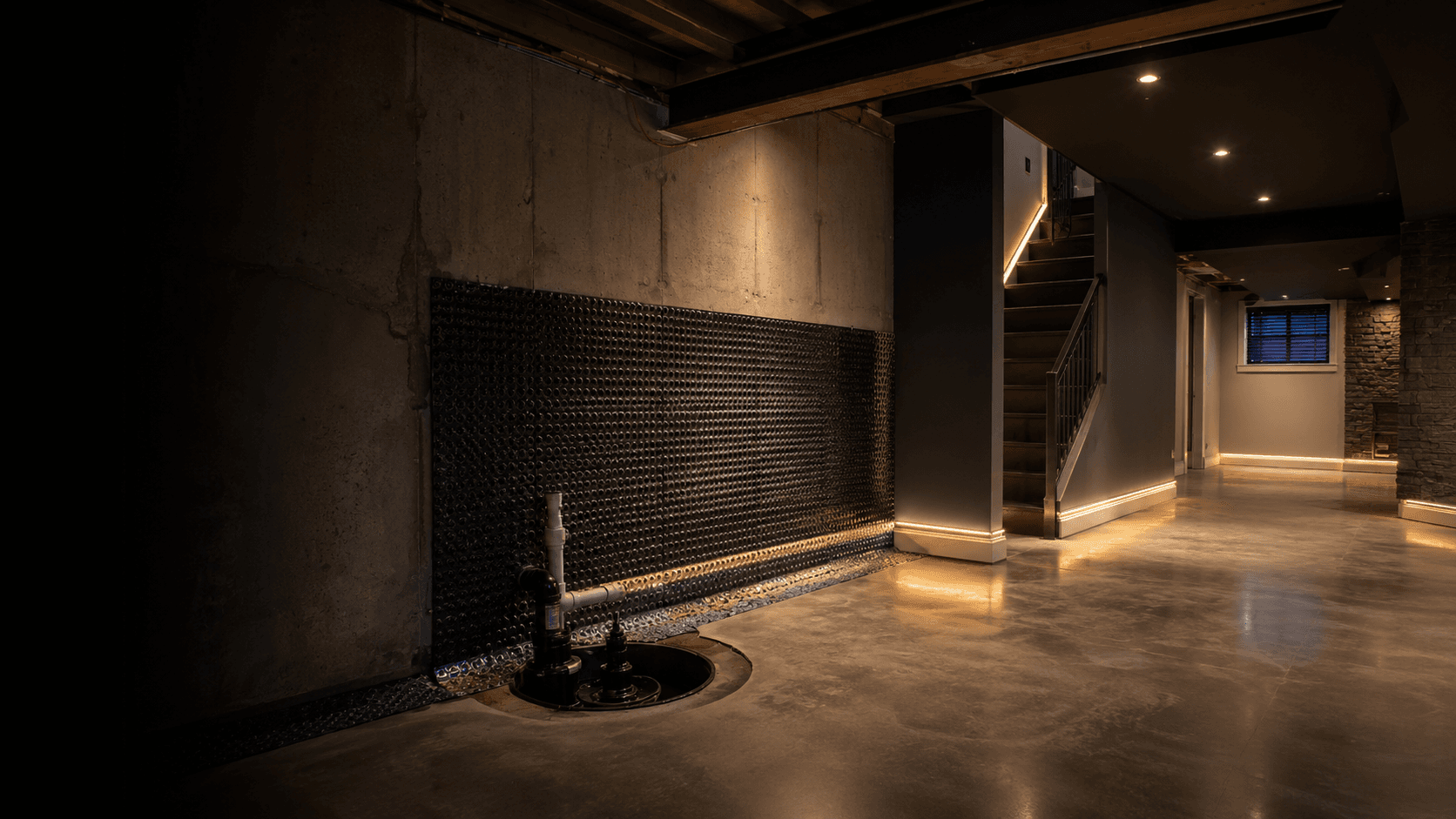
Interior waterproofing work happens along the basement floor perimeter, so the most useful thing you can do is create a clear working area.
- Clear a perimeter along the walls. Move furniture, boxes, and shelving units away from the walls where the interior drain will be installed — even a few feet of clearance helps significantly.
- Protect anything you can't move. Cover items that must stay in the basement with plastic sheeting to protect against dust from the concrete cutting involved in interior work.
- Plan for noise. Cutting the concrete floor along the perimeter is loud — if you work from home, plan accordingly for the days the work is happening.
- Clear a path to the work area. Crews need to move tools, materials, and excavated concrete in and out, so make sure stairwells and hallways leading to the basement are unobstructed.
Preparing for exterior waterproofing
Exterior work happens outside, along the foundation, so preparation is more about the yard than the interior of the home.
- Flag or move anything valuable near the foundation. Garden beds, decorative landscaping, small trees, and outdoor furniture near the excavation zone should be moved or clearly identified if they can't be.
- Locate buried utilities and irrigation lines. Let your contractor know about any sprinkler lines, low-voltage lighting, or other buried features near the foundation so they can work around them.
- Check with your contractor about fencing or gates. Excavation equipment needs a clear path — a gate might need to be temporarily removed, or a section of fence taken down and restored afterward.
- Expect some disruption to your yard. Excavation along the foundation disturbs the soil and any grass or plantings directly above it — ask what restoration is included in your quote so expectations are clear upfront.
Confirm permits and logistics ahead of time
Depending on scope, some foundation and drainage work requires a municipal permit. Ask your contractor directly whether this project needs one, and who is responsible for obtaining it — this should be settled before work begins, not discovered partway through.
Keep pets and kids clear of the work zone
Both interior and exterior waterproofing involve open excavation, exposed sharp materials, and equipment that isn't safe for pets or children to be near. Plan to keep them out of the basement or away from the yard's work zone for the duration of the project.
The payoff of a little preparation
None of this preparation is complicated, but it meaningfully speeds up the work and reduces the chances of anything being damaged or in the way once the crew arrives. A contractor who walks you through exactly what to expect and prepare for before the job starts is also a good sign of how the rest of the project will go.
Frequently Asked Questions
- Do I need to move everything out of my basement?
- Not everything — but clearing a few feet of open space along the walls where the crew will be working makes the job significantly faster and protects your belongings from dust and debris.
- Will exterior waterproofing damage my garden or landscaping?
- Excavation along the foundation will disturb landscaping directly in that zone. A reputable contractor restores grading and can often replant where possible, but anything particularly valuable or hard to replace should be moved beforehand if feasible.
- How long does a typical waterproofing project take?
- Interior waterproofing projects are often completed in a matter of days for an average basement. Exterior waterproofing takes longer since it involves excavation, membrane application, curing time, and backfill — timeline depends heavily on the scope.
- Should I be home during the work?
- You don't need to be present for the entire project, but being available at the start for a walkthrough and at the end for a final review is a good idea.